The Black-headed Gull, lively companion of coastal marshes
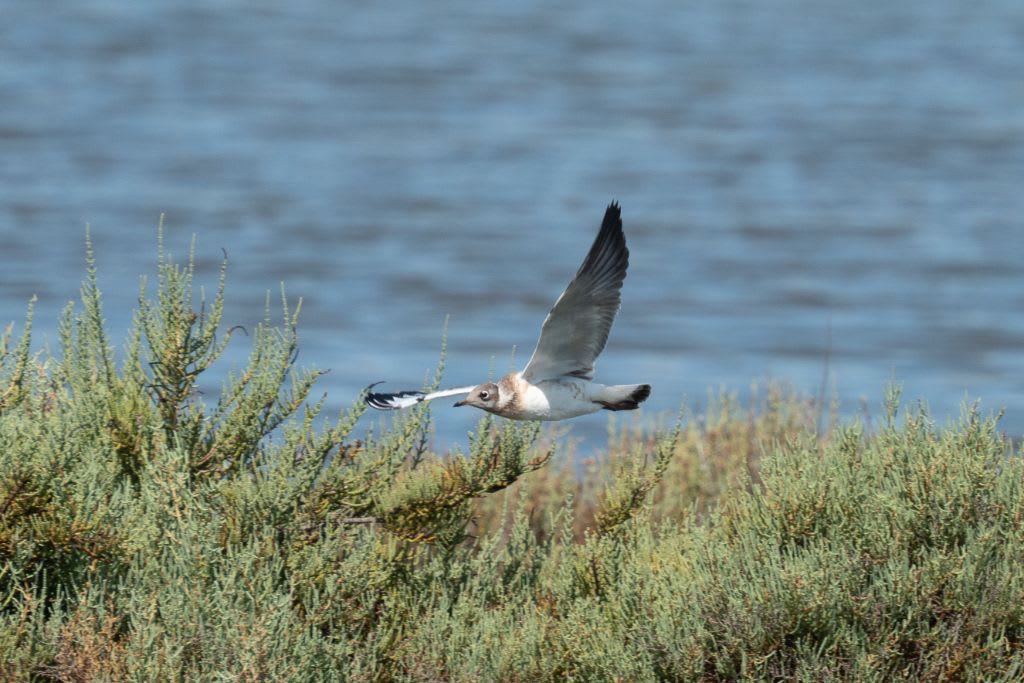
Far smaller and more agile than gulls, the Black-headed Gull (Chroicocephalus ridibundus) is an energetic, highly gregarious larid. Flocks enliven Hyères saltpans through summer and autumn with acrobatic swoops chasing flying insects.
My field observations in the Var — sites, months and context
✓ Aug 2026 Synthesis (1 record)Regularly found at Les Pesquiers and along Giens beaches, resting along marsh edges or bobbing lightly in tight rafts on calm lagoons.
Commented in situ photo gallery
1 telephoto photographs taken in the Var department (Rule 11)
Recognizing the species on my photos — visible details
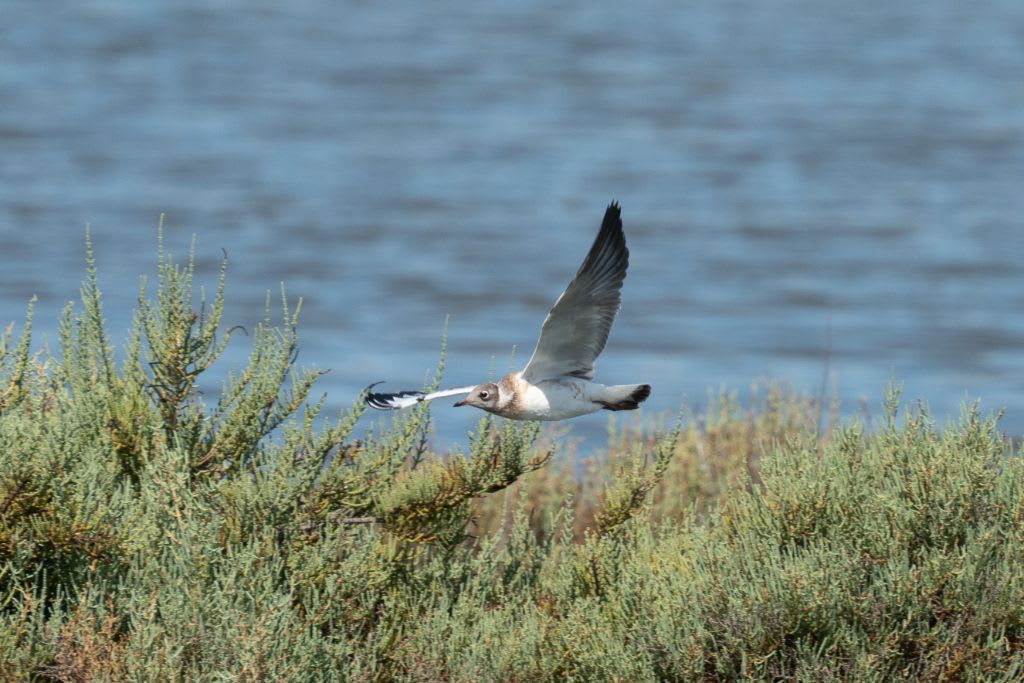
Length around 38 cm. In non-breeding late summer plumage, the dark chocolate hood recedes to a dark smudge behind the eye. Bright crimson bill and legs.
Coastal salt pans, brackish lagoons, sandy beaches, marinas and calm estuaries.
Surface small fish, marine worms, flying ants, midges and aquatic invertebrates.
Photographing the species: field experience
Captured floating gracefully or in quick flight, its scarlet bill and slender profile add bright accents to coastal seascapes.
- •Despite its English name, its breeding hood is actually rich chocolate-brown, not jet-black.
- •Its raspy cackling call sounds like mocking laughter, giving rise to its French name 'mouette rieuse' (laughing gull).
- •It paddles wet sand and shallow mud with rapid foot-trembling to flush hidden worms to the surface.


