
The Common Chaffinch, familiar songster of the Var pine woods
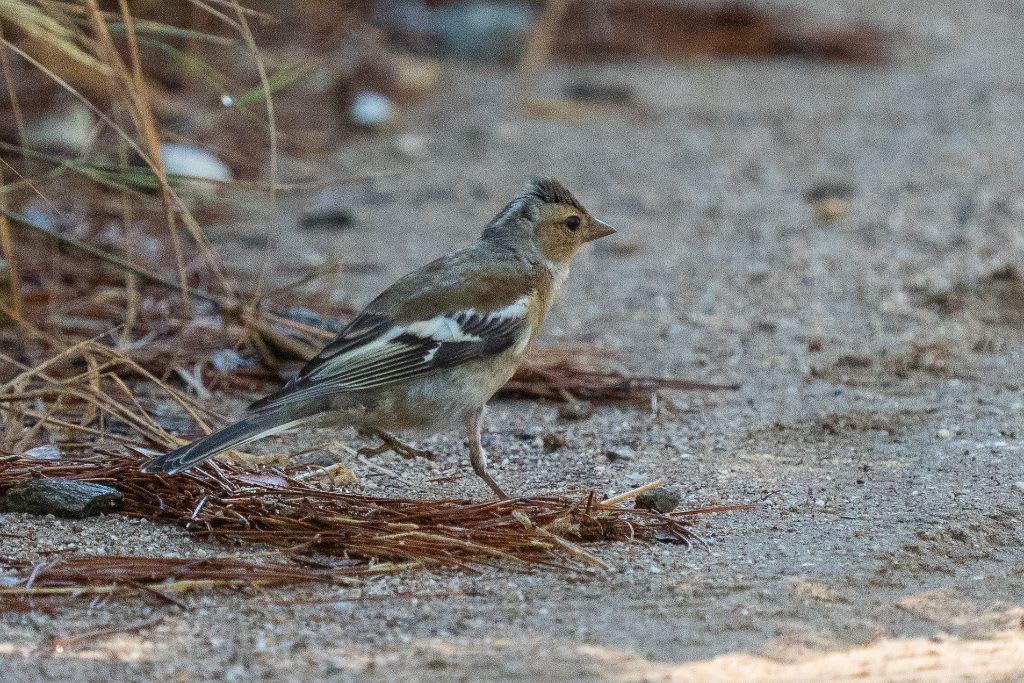
An omnipresent companion of walks beneath umbrella pines and cork oaks in Provence, the Common Chaffinch (Fringilla coelebs) enlivens the forest floor with brisk hops and musical songs. Bordering the Salins des Pesquiers, coastal pine woods offer a protected foraging haven.
My field observations in the Var — sites, months and context
✓ Aug 2026 Synthesis (2 records)A female photographed in August 2026 on the pine needle carpet along the wooded littoral belt of Les Pesquiers in Hyères, meticulously foraging for fallen seeds.
Commented in situ photo gallery
1 telephoto photographs taken in the Var department (Rule 11)
Recognizing the species on my photos — visible details
Length 15 cm. Two conspicuous white wingbars on dark wings, greenish rump. Males have slate-blue caps and brick-red breasts; females are subtly dressed in olive-brown with creamy underparts.
Coastal pine woodlands, mixed Mediterranean forests, wooded gardens and scrub margins.
Pine seeds, weed and grass seeds on the ground; caterpillars and insects during the nesting season.
Photographing the species: field experience
Photographing a ground-feeding passerine in shaded undergrowth requires careful exposure in dappled light to reveal subtle plumage tones against rufous pine needles.
- •Its scientific name 'coelebs' (bachelor) was bestowed by Linnaeus who observed that in Sweden females migrated south while males remained behind.
- •Male territorial songs vary across different valleys in the Var, forming genuine regional acoustic dialects.
- •The double white wingbars act as a clear visual contact signal in dense tree canopies.
