
The Common Greenshank, watchful long-billed wader of the Var lagoons
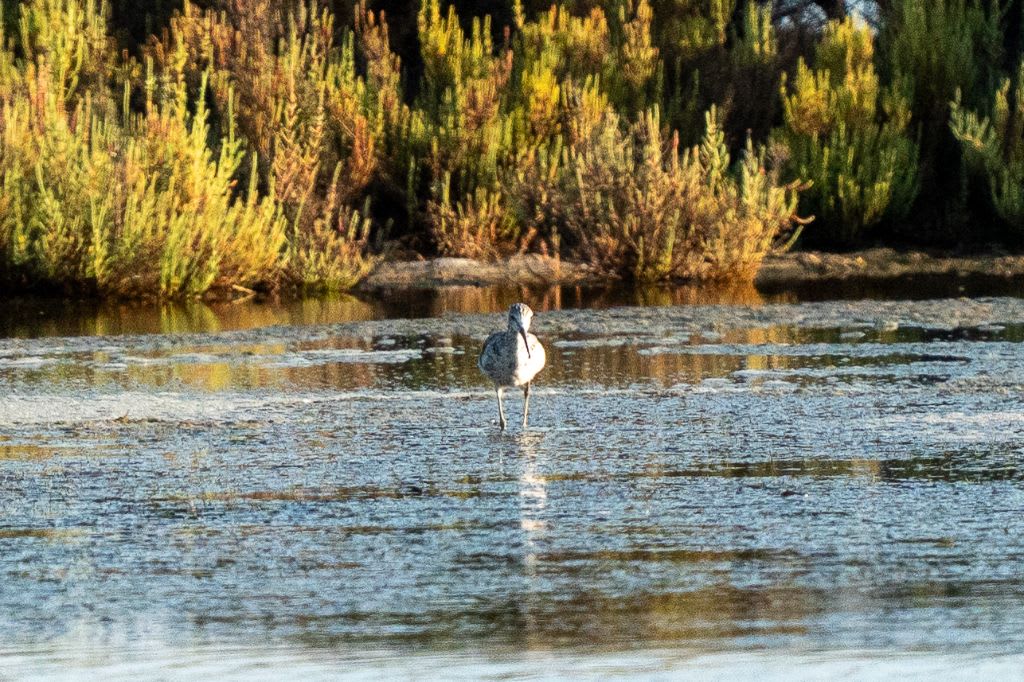
A tall northern wader with an elegant silhouette and keen watchful eye, the Common Greenshank (Tringa nebularia) owes its name to its ringing, far-carrying alarm calls ('tew-tew-tew'). Staging at Salins des Pesquiers, it strides across calm waters with purposeful energy.
My field observations in the Var — sites, months and context
✓ Aug 2026 Synthesis (2 records)Captured in August 2026 at Salins des Pesquiers in Hyères, both facing forward in alert stance and in lateral profile along muddy banks, hunting small fish and shrimps in brackish shallows.
Commented in situ photo gallery
2 telephoto photographs taken in the Var department (Rule 11)
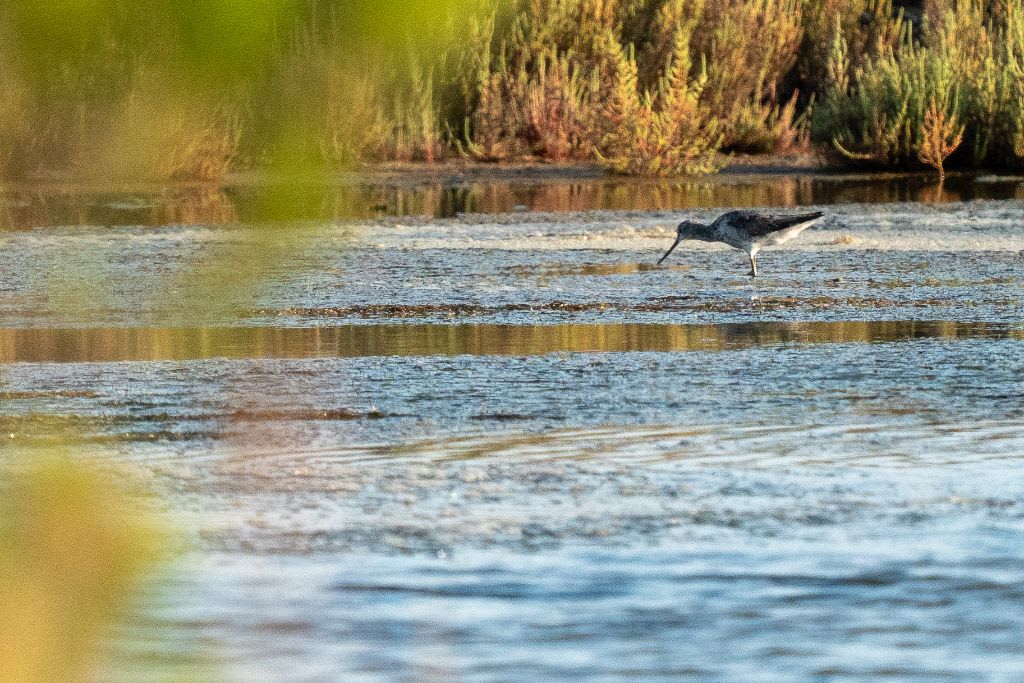
Recognizing the species on my photos — visible details
Length 30-35 cm. Long slate-grey bill slightly upturned with a greenish base, characteristic dull greenish legs, ash-grey spangled upperparts and pure white underparts.
Coastal lagoons, brackish mudflats, saltpan canals and sheltered maritime estuaries.
Small fish fry, brackish water shrimps, marine worms and diving beetles caught during active dashes.
Photographing the species: field experience
Its natural wariness and quick alarm flight require a slow, careful approach along dikes, taking advantage of vegetation gaps to frame portraits without startling the bird.
- •Its loud three-note alarm call instantly alerts every other wader and heron across the lagoon basin.
- •It breeds in northern Scandinavian and Siberian bogs and taiga before flying south across Europe to African wintering grounds.
- •Unlike waders that probe blind in sediment, it frequently hunts visually, sprinting through shallows after schooling baitfish.


