
Scolopacidae·Ordre des Charadriiformes·Quasi menacé (NT) mondialement — Espèce suivie·📅 Updated:
The Eurasian Curlew, crescent-billed voyager of the lagoons
Eurasian Curlew (Numenius arquata)
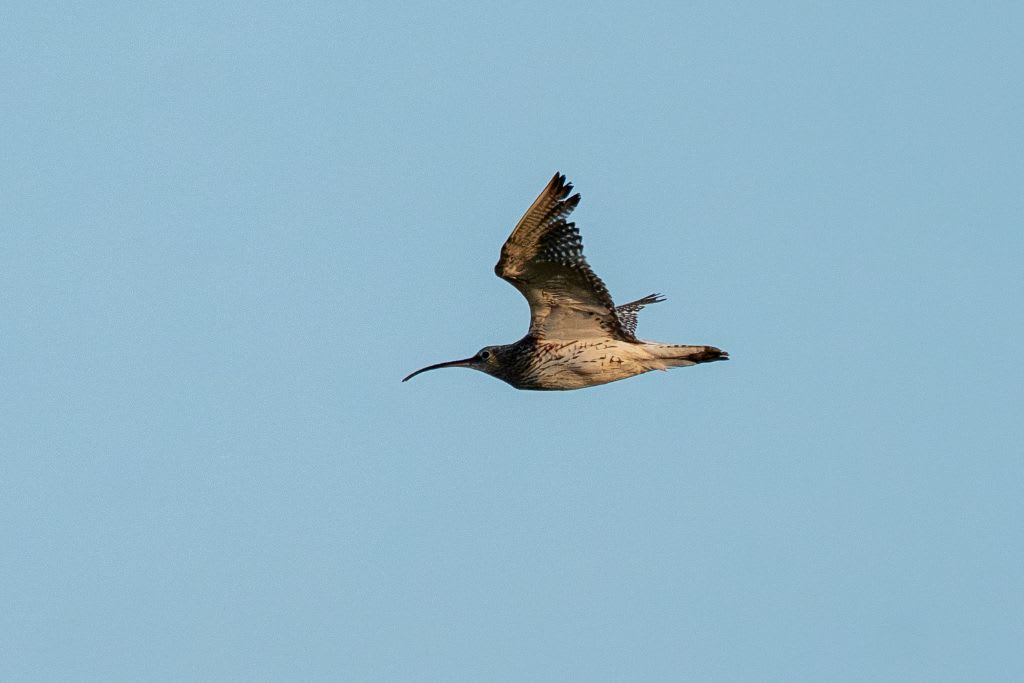
Agrandir
The largest wader in Europe, instantly identified by its extraordinarily long downcurved bill and haunting fluted whistle across the salt pans.
My field observations in the Var — sites, months and context
✓ Aug 2026 Synthesis (1 record)Captured in solo flight over the Pesquiers salt pans during late summer migration.
August 2026 Field Mapping Record:
📍Pesquiers Salt Marshes(1 rec)
Statut dans le Var : Migrateur régulier et hivernant le long des lagunes·Période privilégiée : Mai à Septembre
Commented in situ photo gallery
1 telephoto photographs taken in the Var department (Rule 11)
Agrandir
Photo 1 / 1 — Salins des Pesquiers, Hyères, VarEn vol solo dans le ciel bleu, ailes relevées pendant un battement
Recognizing the species on my photos — visible details
Wingspan 80-100 cm, decurved bill up to 15 cm long, cryptically patterned buff-brown plumage, and contrasting white rump patch in flight.
Habitat
Open salt pans, tidal mudflats and wet coastal pastures.
Diet
Marine worms, mud crabs, shrimps and burrowing bivalves.
Photographing the species: field experience
Incredibly wary with keen eyesight. Patient handheld observation from marked dykes using the 200-600mm zoom ensures ethical, undisturbed captures.
Remarkable facts & hide notes:
- •Females have noticeably longer bills than males, allowing them to probe deeper sediment layers without competition.
- •Its name echoes its melodic bubbling whistle heard across coastal estuaries.
- •Var visitors breed in northern peatlands and Siberian tundras.


