The Great Cormorant, master deep-diver of Mediterranean waters
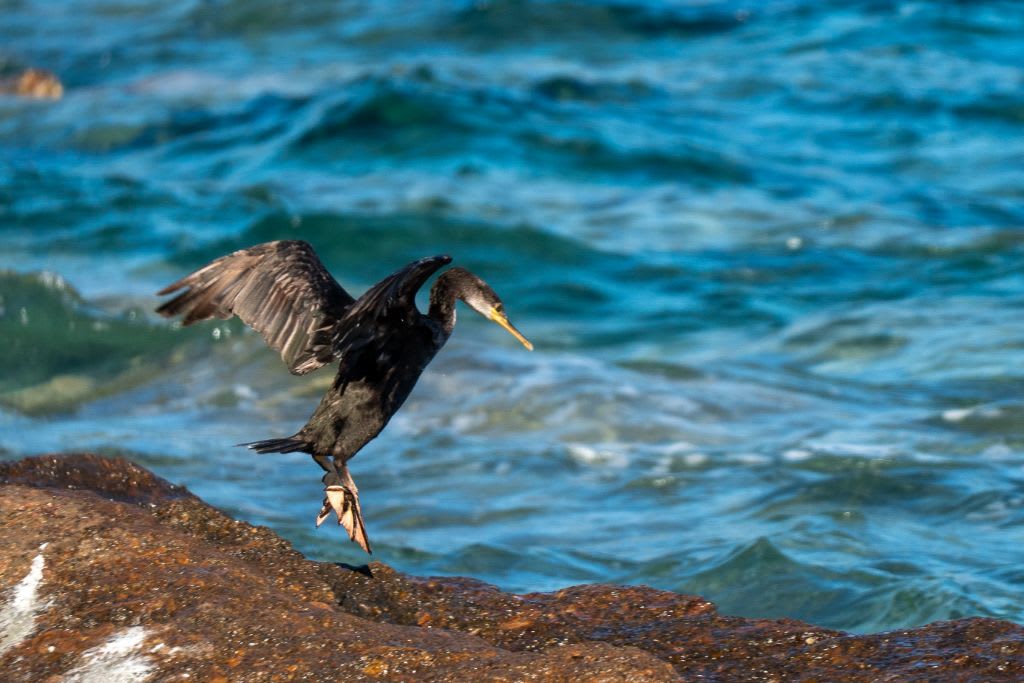
A large dark waterbird with emerald-turquoise eyes and webbed feet, the Great Cormorant (Phalacrocorax carbo) is an extraordinary underwater hunter. A familiar presence perching atop wooden stakes and boulders across Hyères lagoons, drying outstretched wings.
My field observations in the Var — sites, months and context
✓ Aug 2026 Synthesis (1 record)Regularly found across Les Pesquiers, Les Vieux Salins, the Gapeau river mouth and coastal rocky points, swimming low in the water before diving smoothly.
Commented in situ photo gallery
1 telephoto photographs taken in the Var department (Rule 11)
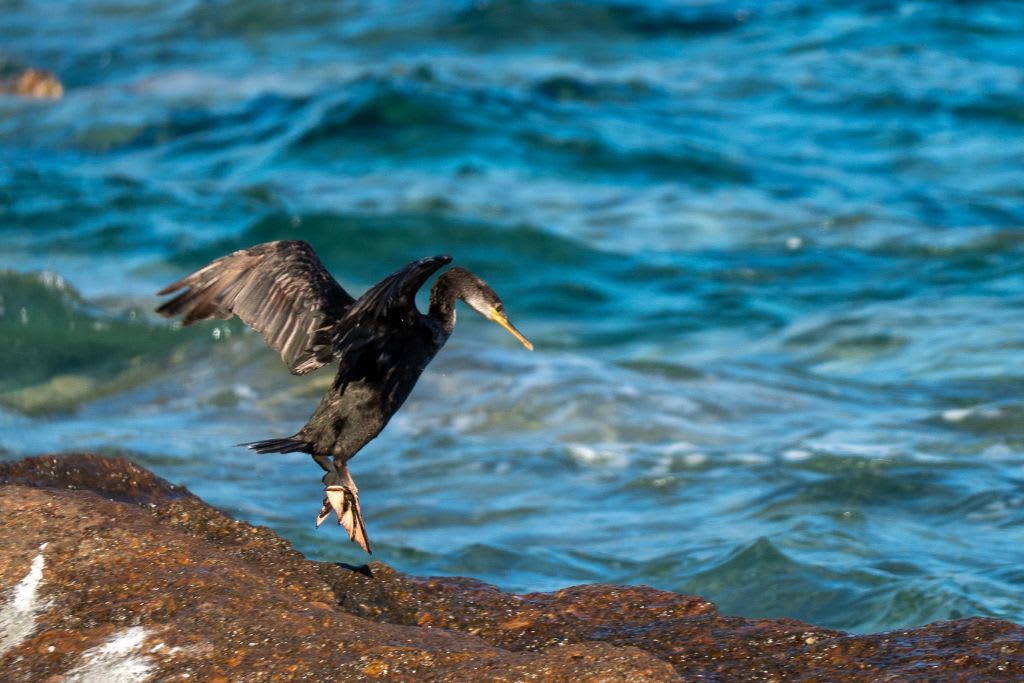
Recognizing the species on my photos — visible details
Heavily built 90-cm frame with glossy bronze-black feathers, hooked grey bill, whitish throat patch, and striking emerald-green eyes.
Coastal lagoons, sheltered estuaries, salt marshes, coastal piers and rocky shorelines.
Brackish and marine fish (mullets, sea bass, gobies, flatfish) caught in pursuit dives.
Photographing the species: field experience
Captured in powerful level flight or sun-drying its plumage, its prehistoric silhouette provides dramatic monochrome compositions.
- •Because its plumage absorbs some water to reduce buoyancy while diving, it must perch with outstretched wings to air-dry its feathers.
- •It can hold its breath for up to two minutes, pursuing fish at depths exceeding ten meters.
- •Traveling flocks fly in disciplined V-formations to reduce aerodynamic drag.


