
Western Marsh Harrier, dancing flight over the Var reedbeds
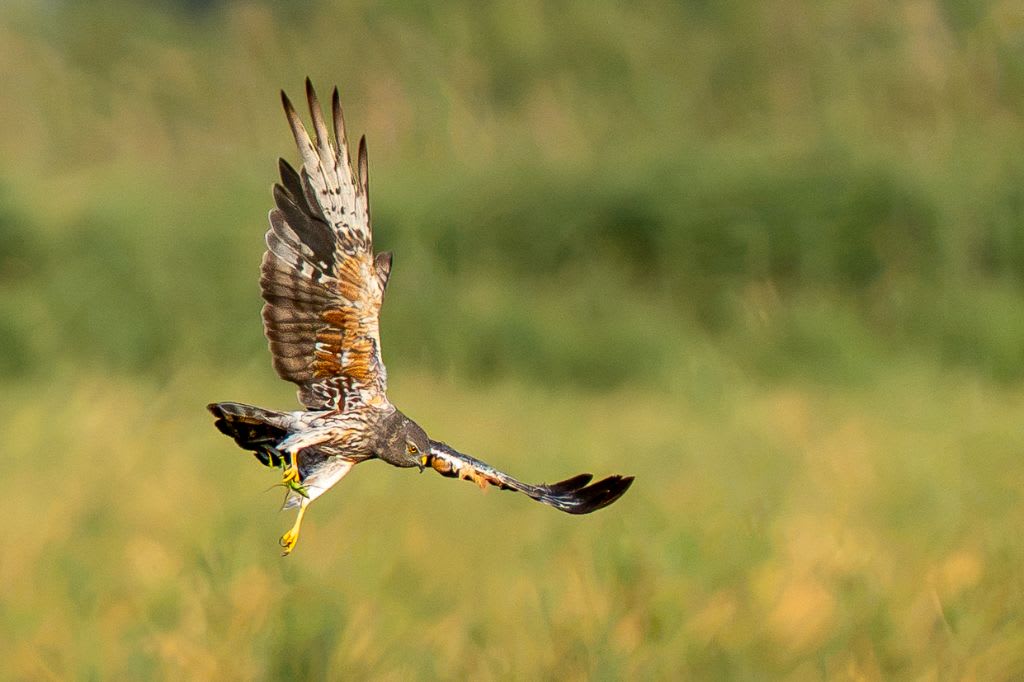
With its impressive wingspan and unmistakable shallow V-shaped wings, the Western Marsh Harrier patrols low over reeds and lagoons with dramatic poise.
My field observations in the Var — sites, months and context
✓ Aug 2026 Synthesis (1 record)Observed and photographed in buoyant low hunting flight over reedbeds and marsh edges around Plan de La Garde and Giens.
Commented in situ photo gallery
1 telephoto photographs taken in the Var department (Rule 11)
Recognizing the species on my photos — visible details
Wingspan 120-135 cm with broad wings held in a shallow dihedral 'V'. Adult male tri-coloured (brown, silvery-grey wings and tail, black tips); female and juvenile deep dark chocolate-brown with cream-gold crown and throat.
Extensive reedbeds, brackish lagoons, freshwater marshes, drainage ditches and wet meadows.
Waterbird chicks (coots, teal), small wetland mammals, frogs, fish and large aquatic insects.
Photographing the species: field experience
Its low buoyant quartering flight skimming reed tips requires fast autofocus tracking to keep focus razor-sharp amidst swaying vegetation.
- •Hunts almost exclusively on buoyant slow wingbeats, skimming a mere couple of feet above dense reed crowns.
- •Females are substantially larger than males, enabling them to tackle heavier prey like moorhens and juvenile ducks.
- •Featured in Cyril Garnier's photographic fieldwork on French raptors, recognized by the FPF.


