
The Western Cattle Egret in the Var, white silhouette of coastal pastures
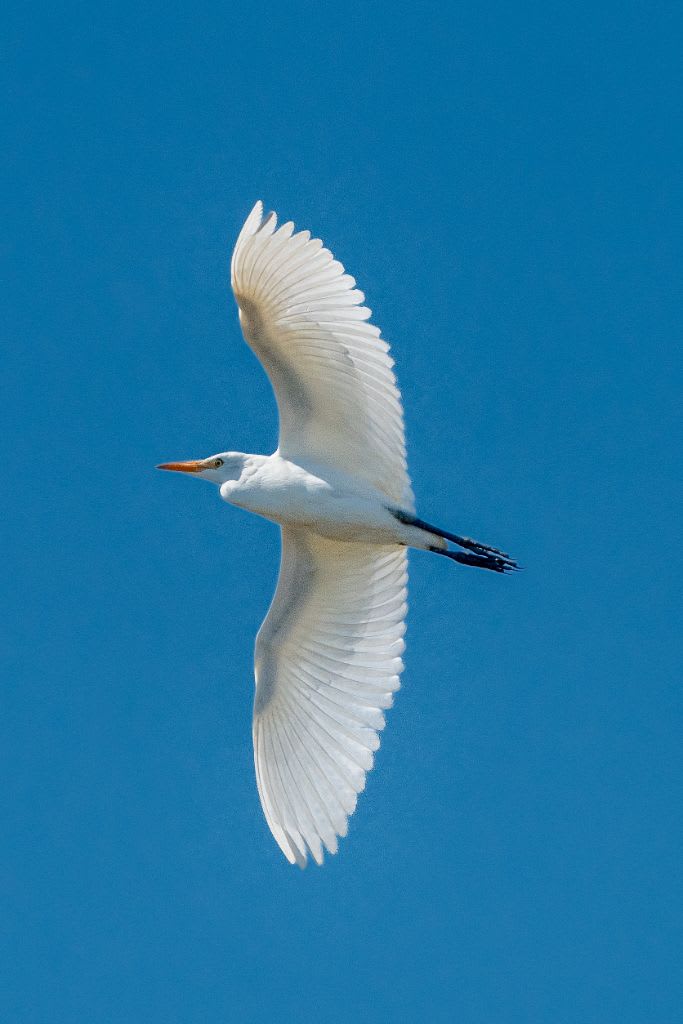
More compact and robust than the Little Egret, the Western Cattle Egret (Bubulcus ibis) features pure white plumage and a short, dagger-like golden-yellow bill. Photographed in flight over the Vieux Salins d'Hyères.
My field observations in the Var — sites, months and context
✓ Aug 2026 Synthesis (2 records)Captured handheld in flight over the Vieux Salins d'Hyères, travelling between brackish salt lagoons and adjacent damp fields.
Commented in situ photo gallery
1 telephoto photographs taken in the Var department (Rule 11)
Recognizing the species on my photos — visible details
Length 48-53 cm, wingspan around 90 cm. Stocky build with a relatively short neck, stout golden-orange bill, pure white plumage and yellowish-dark legs.
Damp pastures, margins of coastal salt marshes, agricultural ditches and meadows.
Grasshoppers, crickets, beetles, small amphibians, lizards and aquatic invertebrates.
Photographing the species: field experience
Fast and direct flight calls for dynamic autofocus tracking on the 200-600mm lens, preserving subtle feather texture under harsh Mediterranean sunshine.
- •Originally native to Africa and Asia, it underwent an extraordinary natural range expansion into southern Europe during the 20th century.
- •Named for its habit of foraging beside grazing cattle and horses, snatching insects stirred up by their hoofs.
- •Unlike most other herons, it spends much of its time foraging on dry terrestrial grasslands rather than wading in deep water.


