
The Common Ringed Plover, tireless wanderer of northern shores
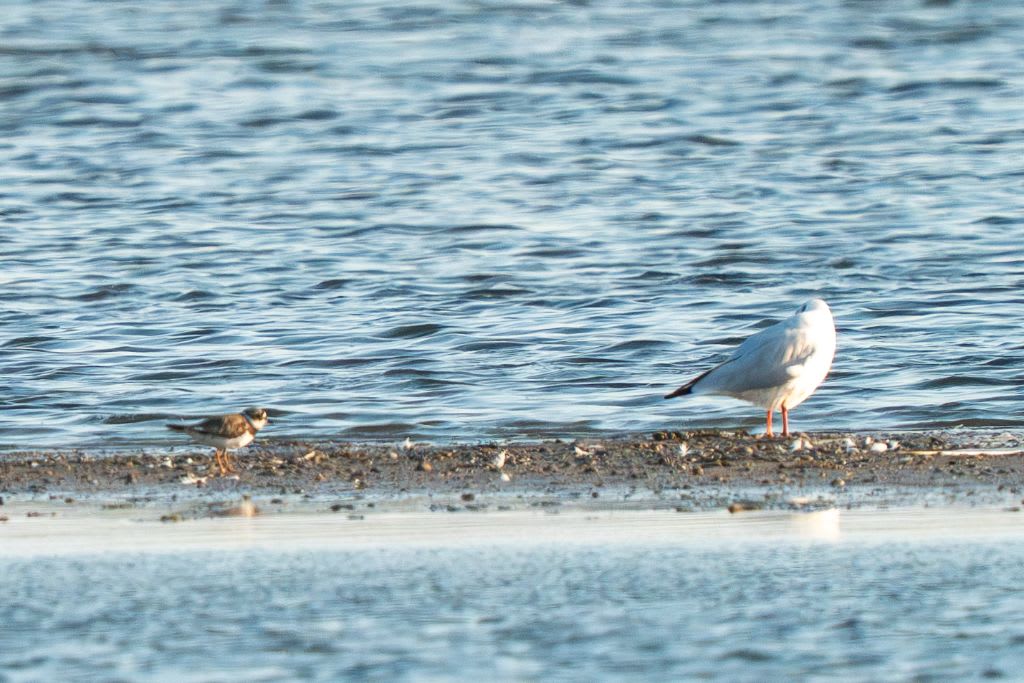
A plump, energetic small plover with an alert yellow-ringed eye, the Common Ringed Plover (Charadrius hiaticula) migrates south from Arctic coasts and Scandinavia to stage along Mediterranean shores. At Salins des Pesquiers, it readily rests alongside resident gulls on dry mudflats.
My field observations in the Var — sites, months and context
✓ Aug 2026 Synthesis (1 record)Photographed in August 2026 on dry mudflats of Salins des Pesquiers in Hyères, resting peacefully alongside an adult Black-headed Gull in non-breeding plumage.
Commented in situ photo gallery
1 telephoto photographs taken in the Var department (Rule 11)
Recognizing the species on my photos — visible details
Length 18-20 cm. Broad complete black breast band, dark face mask with contrasting white forehead patch, sandy-brown upperparts and pure white belly. Bright orange legs and short orange bill with a black tip.
Shingle beaches, dry saltpan mudflats, shallow lagoons and wild coastal sandbars.
Polychaete worms, sandhoppers, small beetles and shoreline molluscs snatched in brief bursts.
Photographing the species: field experience
The scale contrast between the petite plover and the adjacent resting gull provides an engaging visual narrative of interspecies coexistence during migration rest stops.
- •Its hunting technique is typical of plovers: run, sudden pause, careful visual scan, followed by a swift peck.
- •It taps one foot rapidly against moist mud to simulate raindrops and lure marine worms to the surface.
- •High-Arctic populations travel over 10,000 km between Greenland or Siberia and southern Africa.


