
The Mallard, quintessential waterfowl of the Var lagoons
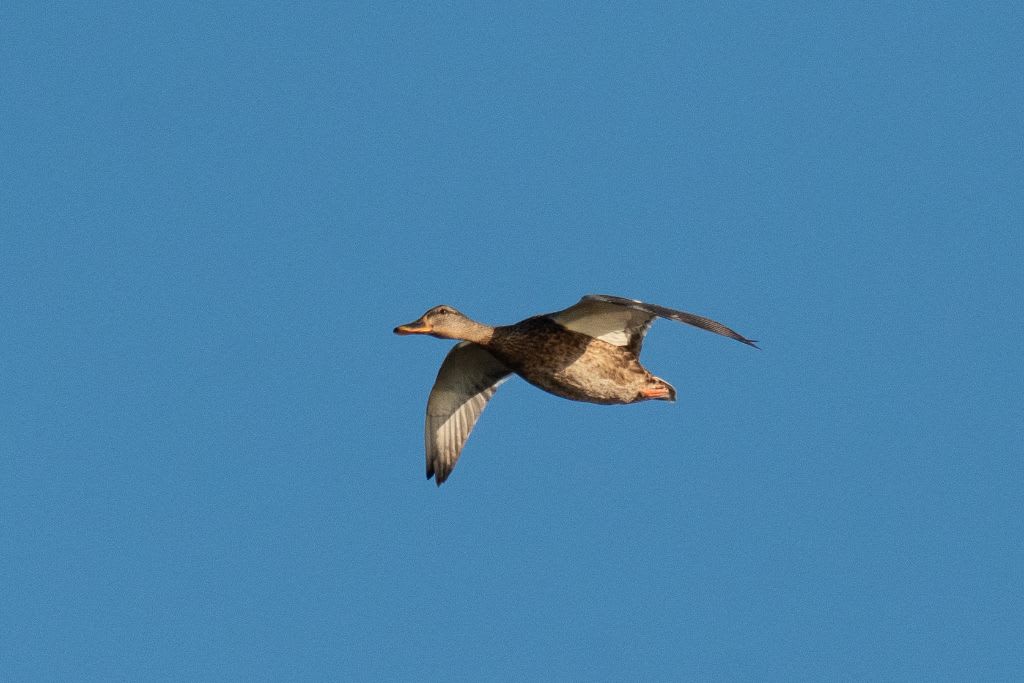
The Mallard (Anas platyrhynchos) is the most familiar dabbling duck of European wetlands. Along the coastal lagoons and canals of the Hyères salt pans, it enlivens open water with powerful flights and characteristic surface dabbling.
My field observations in the Var — sites, months and context
✓ Aug 2026 Synthesis (2 records)Captured in steady flight over the Vieux Salins of Hyères in August 2026, revealing the dynamic silhouette of a female duck winging across the Mediterranean sky.
Commented in situ photo gallery
1 telephoto photographs taken in the Var department (Rule 11)
Recognizing the species on my photos — visible details
Length 50-65 cm. The breeding male features an iridescent bottle-green head and white neck ring. The female displays cryptic mottled brown plumage with a striking purple-blue wing speculum bordered by white bars.
Coastal lagoons, salt pans, freshwater wetlands and sheltered rivers.
Aquatic plants, seeds, halophyte vegetation, small crustaceans and molluscs.
Photographing the species: field experience
The fast, direct flight of the mallard demands a smooth tracking motion with the 200-600mm telephoto lens to freeze plumage details against the clear blue sky.
- •The metallic violet-blue wing speculum is shared by both sexes as a visual beacon during flock flights.
- •As a classic dabbler, it upends vertically to feed on submerged vegetation rather than diving deeply.


