The Ferruginous Duck, rare mahogany jewel of Plan de La Garde
Known as the cherished 'local jewel' of Plan de La Garde, the Ferruginous Duck (Aythya nyroca) is one of Western Europe's rarest and most threatened wildfowl. Boasting a rich mahogany-chestnut plumage, snow-white undertail coverts and a pure white iris in adult males, this secretive diving duck is the true highlight of Var wetland birding.
My field observations in the Var — sites, months and context
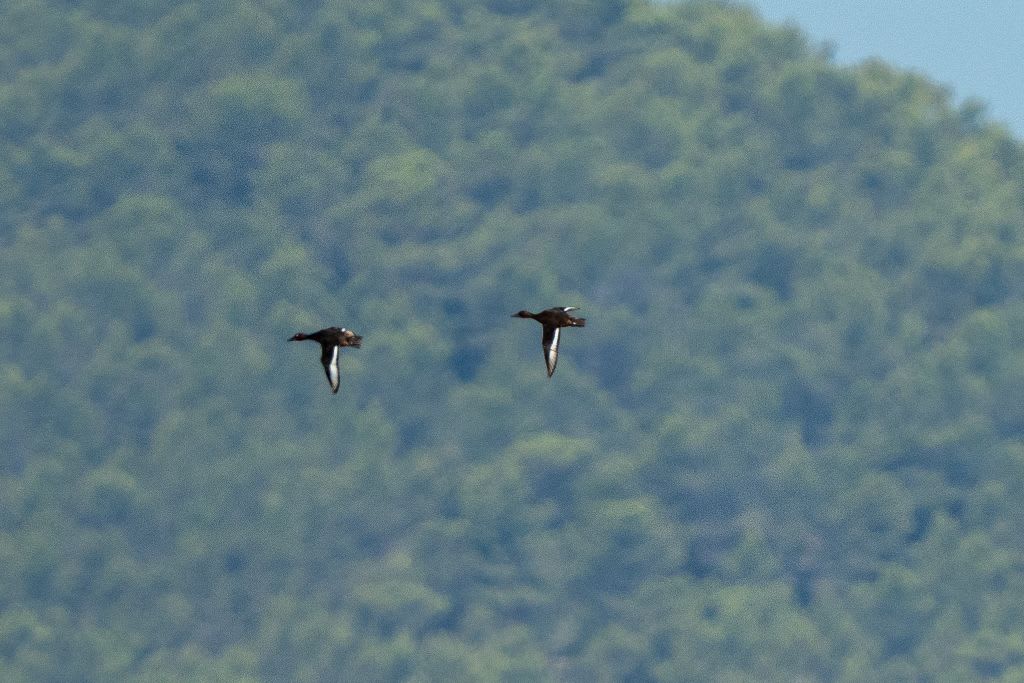
✓ Aug 2026 Synthesis (1 record)Encountered and photographed at Plan de La Garde (La Garde and Le Pradet) in August 2026. A pair was captured in synchronized flight skimming over the water before vanishing into dense emergent reedbeds.
Commented in situ photo gallery
1 telephoto photographs taken in the Var department (Rule 11)
Recognizing the species on my photos — visible details
Length 38 to 42 cm with a 60–67 cm wingspan. Uniform deep mahogany-chestnut plumage; immaculate white undertail coverts form a conspicuous white triangle. In flight, a broad white wing-stripe extends along the secondaries and primaries. Adult males exhibit an unmistakable white iris, whereas females display dark eyes.
Shallow freshwater pools rich in submerged aquatic macrophytes, fringed by extensive reedbeds providing shelter and security.
Submerged aquatic vegetation (seeds, stems, stoneworts and pondweeds), supplemented by aquatic invertebrates, water snails and insect larvae gathered while diving.
Photographing the species: field experience
An exceptional field encounter: photographing a pair of this shy duck in full flight handheld with the full-frame Sony Alpha 7 IV and 200-600mm lens. No blind, no camouflage suit, just slow and respectful stalking along the water's edge in gentle early morning light.
- •Plan de La Garde is among the rare French sites where Ferruginous Duck breeding and regular staging are documented.
- •The male's white iris is so distinctive that it earned the species its historical English name 'White-eyed Pochard'.
- •Unlike larger pochards that prefer deep open water, the Ferruginous Duck frequents shallow vegetated pools under a meter deep.


